What happens in the first 24 hours after quitting smoking?
A practical, plain-English guide to what changes in your body during the first day without cigarettes.
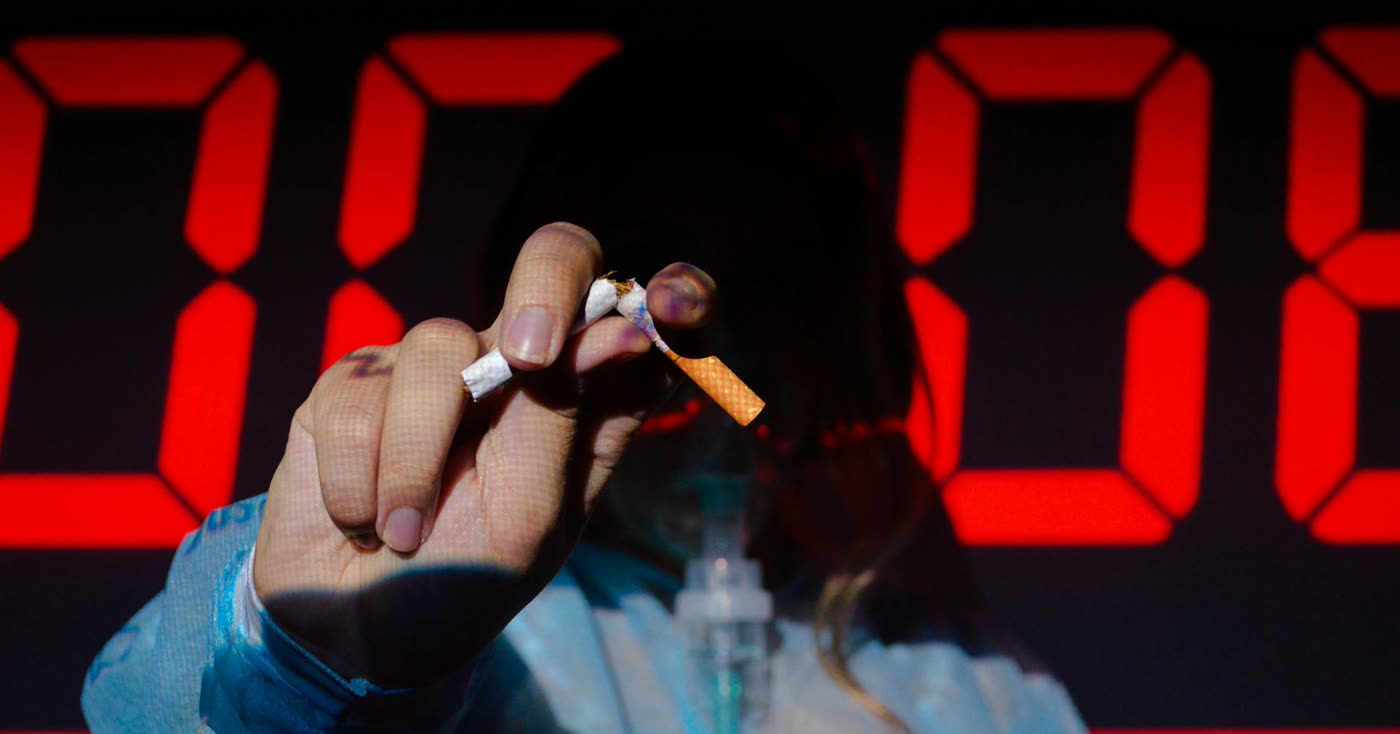
The first 24 hours of quitting smoking are louder than they sound on paper. Most of the visible work is happening inside your body, and most of the noise you’ll feel is happening in your head. Here’s what each looks like.
In your body

At about 20 minutes the immediate spike from your last cigarette starts fading. Heart rate begins to settle. Blood pressure starts coming back toward your normal baseline.
Between 8 and 12 hours, carbon monoxide in your blood drops. Carbon monoxide is the gas in cigarette smoke that competes with oxygen for room in your red blood cells. As it leaves, your body delivers oxygen more efficiently. Some people notice they aren’t as out of breath when climbing stairs that same evening. Others feel nothing yet. Both are fine.
Around 24 hours is when public-health sources start putting numbers on it: the risk of a heart attack begins to fall compared to a continuing smoker. You won’t feel it like a switch, but the line on the chart is moving in the right direction.
In your head
The body part is often easier than the head part. The first day usually brings:
- A cluster of three to ten short cravings, each lasting 3 to 5 minutes.
- Restlessness, irritability, or trouble concentrating.
- Slightly worse sleep on day one or two for some people.
- Hunger or a desire to put something in your mouth (gum and water are useful).
These are real, but they peak fast and fade fast. The trick on day one is not to white-knuckle through twelve hours of pure willpower. The trick is to have two or three small moves you can run on autopilot when a craving hits: drink water, walk for two minutes, do a slow exhale, change rooms.
What to do tonight
Three small things tend to make the first 24 hours easier:
- Throw the open pack away. Not in a kitchen drawer “just in case.” Out.
- Set the timer at the moment of your last cigarette. Knowing you’re at hour 6 instead of “today-ish” matters.
- Have a craving plan written down. One sentence is enough: “When a craving hits, I drink water and walk for two minutes.”
That’s it. Day one isn’t a heroic effort. It’s a small list of cheap habits.
If symptoms feel severe, such as chest pain, panic that doesn’t pass, or sustained low mood, talk to a doctor or a quitline. Quitting is hard, but it shouldn’t be dangerous on its own.
This content is informational and does not replace medical advice.
Related quit-smoking guides
Useful next reads if you want a clearer plan for cravings, timelines, money, or health milestones.
- Nicotine cravings What cravings feel like, why they spike, and what to do when the urge hits.
- Quit smoking timeline A simple timeline for the first hours, days, weeks, and longer smoke-free milestones.
- Smoking cost calculator Turn pack price and daily cigarettes into a number you can actually feel.
- Health milestones Cautious, source-backed milestones for what can change after quitting.
- Day 2 after quitting Why the second day can feel messy and how to get through it.
- Is day 3 the hardest? A grounded look at the day-3 spike and what usually comes next.
- First 3 days smoke-free A practical map for the first 72 hours without cigarettes.