How much money can you save in a month without cigarettes?
A simple way to calculate one month of cigarette savings, with realistic examples and what to do with the money you keep.

You can estimate one month of cigarette savings with a simple formula: cigarettes per day ÷ cigarettes per pack × pack price × 30. If you smoke a pack a day, one smoke-free month is roughly 30 packs you did not buy.
The exact number depends on your local price, how many cigarettes are in a pack, and whether you usually buy single packs, cartons, or roll-your-own tobacco. Use your real number. The point is not to create a perfect spreadsheet; it is to make the cost visible.
Quick monthly formula
Use this:
Monthly savings = daily cigarettes ÷ cigarettes per pack × pack price × 30
Examples:
- 10 cigarettes a day, 20 in a pack: 10 ÷ 20 = 0.5 pack per day. Monthly savings = 0.5 × pack price × 30.
- 20 cigarettes a day: 1 pack per day. Monthly savings = 1 × pack price × 30.
- 30 cigarettes a day: 1.5 packs per day. Monthly savings = 1.5 × pack price × 30.
If your pack costs $8.39, the reference average shown by Smokefree.gov for the United States, a pack-a-day month is about $252 before any extra costs. If your local pack price is higher or lower, swap in your real number.
Do not forget the quiet extra costs
The pack price is the obvious part. Smoking can also create smaller costs that are easy to ignore:
- lighters, rolling papers, filters, or accessories
- delivery or late-night shop runs
- cleaning costs for clothes, car, or home
- more frequent breath mints, gum, or deodorant
- time spent leaving work, meals, or family time to smoke
You do not need to put a price on every minute. But if you only count the pack, you may be undercounting what smoking takes from your month.
Why monthly savings can feel more motivating than yearly savings
Yearly totals are bigger, but a month is easier to believe.
A monthly number can answer a very practical question: “What changes this week if I do not buy cigarettes?” Maybe it is groceries, a bill, a small debt payment, a train ticket, a birthday gift, or just not being short before payday.
That matters because quitting often feels like losing something in the first days. A visible money number gives your brain a different message: you are not only giving something up; you are keeping something.
If seeing the number helps, use the smoking cost calculator or track it in Smoke Free Tracker. Even a rough running total can make a hard craving feel less abstract.
What should you do with the money?
Pick a job for the money before it disappears into normal spending.
A few simple options:
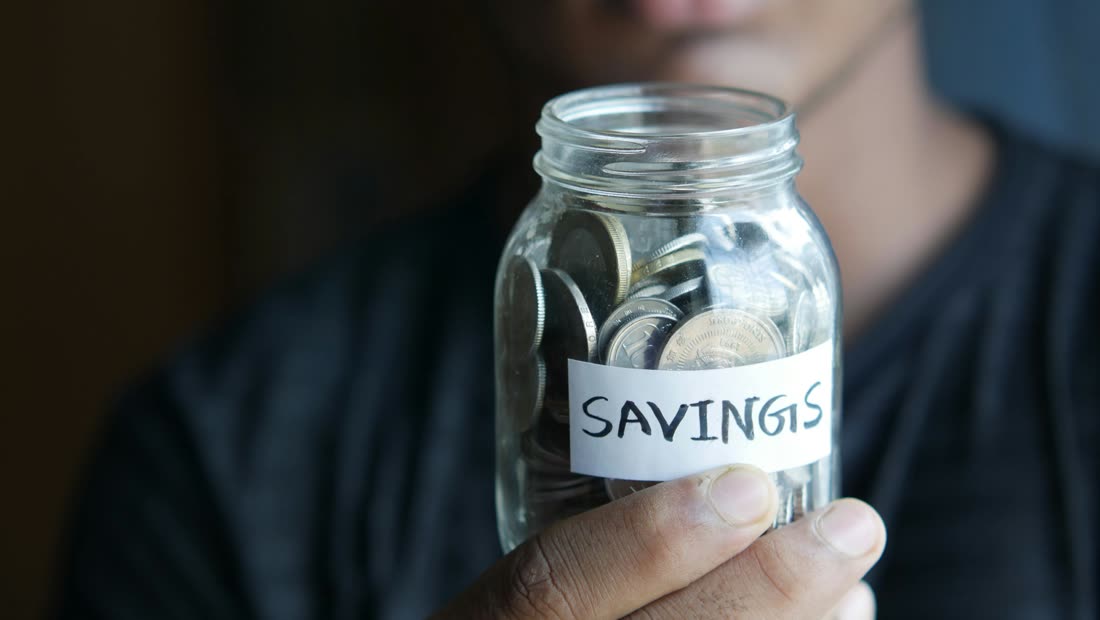
- Make a visible jar or separate account. The money feels more real when it is not mixed with everything else.
- Pay one annoying bill first. Relief is a reward too.
- Plan one small weekly treat. It does not have to be dramatic. Coffee, a book, a haircut, or a meal can mark progress.
- Save for one clear thing. A month of cigarette money can become shoes, a trip, a course, or emergency cash.
- Leave some unassigned. Quitting is stressful enough. Not every dollar needs a perfect purpose.
Try not to use the money plan as a punishment system. If you spend some of it messily, the month is not ruined. Just restart the tracking.
If you smoke less than a pack a day
You still save money. The math just looks smaller at first.
For example, 5 cigarettes a day is one quarter of a 20-cigarette pack. In a 30-day month, that is about 7.5 packs not bought. Multiply 7.5 by your pack price.
That may not sound huge compared with a pack-a-day total, but it is still money you were spending repeatedly. Small daily costs become real monthly money because they happen again and again.
If prices change during the year
Cigarette prices can change because of taxes, retail pricing, discounts, or inflation. Smokefree.gov’s savings calculator notes long-term estimates may assume cigarette prices rise over time.
For a one-month estimate, keep it simple: use the price you would pay today. If your usual price changes later, update the number.
To make the number feel more real, compare it with the smoking cost calculator and keep a simple monthly note of what changed.
Frequently asked questions
How much does a pack-a-day smoker save in one month?
Multiply your pack price by 30. If a pack costs $8.39, that is about $252 for 30 days. If your pack costs $12, it is about $360. Use your actual local price.
Should I count cigarettes I bummed from other people?
If you usually replace them by buying later, yes. If not, you can still count them as part of your smoking amount because they keep the habit going. For money saved, the cleanest number is what you would normally spend.
What if I slipped and smoked one day this month?
Subtract what you bought, then keep going. One day does not erase the whole month. The useful question is: how much did you still not spend compared with your old pattern?
Sources
- Smokefree.gov, “How Much Will You Save?”: savings calculator structure and U.S. average pack-price reference. https://smokefree.gov/quit-smoking/why-you-should-quit/how-much-will-you-save
- NHS inform, “Calculate my savings”: calculator inputs for pack price, cigarettes per pack, cigarettes per day, and smoking history. https://www.nhsinform.scot/stopping-smoking/calculate-my-savings/
- CDC, “Economic Trends in Tobacco”: economic burden of cigarette smoking and the role of price in tobacco demand. https://www.cdc.gov/tobacco/php/data-statistics/economic-trends/index.html
- World Health Organization, “Tobacco control economics”: tobacco use creates large health and economic costs for families, communities, and societies. https://www.who.int/teams/health-promotion/tobacco-control/economics
Related quit-smoking guides
Useful next reads if you want a clearer plan for cravings, timelines, money, or health milestones.
- Nicotine cravings What cravings feel like, why they spike, and what to do when the urge hits.
- Quit smoking timeline A simple timeline for the first hours, days, weeks, and longer smoke-free milestones.
- Smoking cost calculator Turn pack price and daily cigarettes into a number you can actually feel.
- Health milestones Cautious, source-backed milestones for what can change after quitting.
- Day 2 after quitting Why the second day can feel messy and how to get through it.
- Is day 3 the hardest? A grounded look at the day-3 spike and what usually comes next.
- First 3 days smoke-free A practical map for the first 72 hours without cigarettes.